
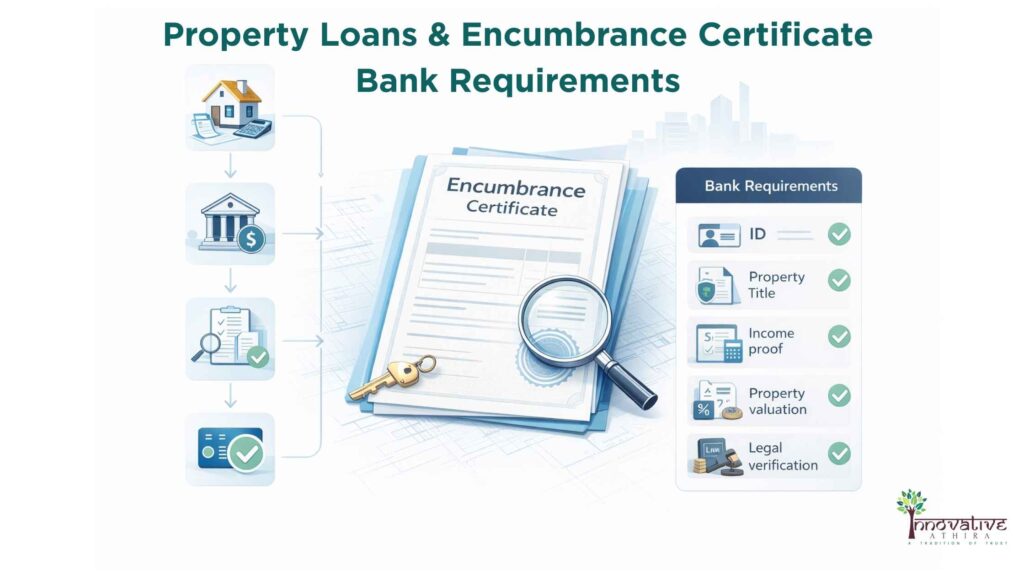
Property buyers in Bangalore often discover that getting a home loan approved is not just about income eligibility or credit score. The real deciding factor lies in the legal strength of the property itself. For anyone exploring property loans, banks scrutinize documentation to ensure the asset is free from risk, compliant with local authorities, and capable of being mortgaged without future complications. This is where the encumbrance certificate and a developer’s legal diligence play a decisive role.
Innovative Developers and Promoters have built their reputation by understanding these banking expectations deeply and aligning every project accordingly. With a strong presence in North Bangalore—particularly around BIEC, Madavara, Nagasandra, and surrounding growth corridors—their layouts and developments are structured to meet the most stringent bank loan approval for property requirements.
Why banks insist on strict legal checks for property loans
Banks lend against property as collateral, which means they must be absolutely confident that the property can be legally enforced in case of default. Even a small discrepancy in land records, approvals, or ownership history can lead to rejection or long delays. From the bank’s perspective, the loan is only as safe as the documentation supporting it.
This is why banks evaluate whether the project falls under BBMP, BDA, or BMRDA jurisdiction, verify compliance with zoning and layout approvals, and examine historical land records in detail. Innovative Developers and Promoters design their projects keeping these regulatory frameworks in mind, especially in fast-expanding outskirts such as Nelamangala (BMRDA) and areas near BIEC that often fall under BDA planning norms.
What is an encumbrance certificate and why it matters to banks
An encumbrance certificate is a legal document that reflects all registered transactions on a property for a specified period. Banks use it to confirm whether the land or apartment has any financial or legal liabilities attached to it. A nil encumbrance certificate indicates that no loans, charges, or claims are recorded against the property during that period, which significantly improves the chances of loan approval.
For buyers, this certificate acts as a mirror into the property’s past. For banks, it is a risk assessment tool. Innovative Developers and Promoters proactively ensure that their projects reflect clean encumbrance records, giving buyers confidence and lenders clarity.
How sale deed verification impacts loan eligibility
Sale deed verification is one of the most critical stages in the bank’s legal due diligence. The sale deed establishes the lawful transfer of ownership from one party to another. Banks examine every previous sale deed in the chain to ensure continuity, legality, and proper registration.
Any missing link, improper stamp duty, or ambiguous ownership clause can raise red flags. Innovative Developers and Promoters maintain a transparent and traceable ownership chain, ensuring that every sale deed verification process stands up to scrutiny by legal officers and bank empaneled advocates.
The importance of clear title in property financing
A clear title means that the ownership of the property is undisputed, well-documented, and legally enforceable. Banks will not finance properties with unclear or defective titles, regardless of location or construction quality.
In North Bangalore, where rapid development has transformed former agricultural lands into residential layouts, title clarity becomes even more important. Innovative Developers and Promoters invest heavily in legal audits, land conversion checks, and approval validations to ensure every buyer receives a property with a clear title that banks are comfortable financing.
Property ownership verification and its role in bank confidence
Property ownership verification goes beyond confirming the seller’s name on paper. Banks assess whether the owner has the legal right to sell, whether all co-owners have consented, and whether any inheritance or succession issues exist.
Innovative Developers and Promoters address this proactively by structuring acquisitions and developments in a way that leaves no ambiguity in ownership. This meticulous approach reduces friction during loan processing and reassures buyers that they are investing in a legally stable asset.
Understanding property mortgages from a bank’s perspective
When banks approve home loans, they create a charge on the property through property mortgages. This legal right allows the bank to recover dues if the borrower defaults. For a mortgage to be enforceable, the property must be free from prior charges and legal complications.
Projects developed by Innovative Developers and Promoters are structured to allow smooth creation of mortgages, with no overlapping claims or unresolved obligations. This clarity speeds up loan disbursal and minimizes post-registration issues.
What makes a legally clean property bank-friendly
A legally clean property is one that complies with local authority norms, has valid approvals, clear ownership history, and no pending litigation. Banks prioritize such properties because they reduce long-term risk.
In areas like Nagasandra, Madavara, and the BIEC belt, jurisdictional clarity between BBMP, BDA, and BMRDA can be complex. Innovative Developers and Promoters navigate these complexities with expertise, ensuring every project aligns with the appropriate authority and documentation standards.
How property disputes affect loan approvals
Property disputes are among the biggest reasons for loan rejection. Even unresolved family claims or minor boundary disagreements can halt financing. Banks avoid assets that may get tied up in litigation, as recovery becomes uncertain.
By conducting exhaustive due diligence before launching any project, Innovative Developers and Promoters minimize the risk of disputes. This proactive approach protects buyers from future stress and positions the property as a low-risk asset for lenders.
Why North Bangalore projects demand higher legal precision
North Bangalore has emerged as one of the most dynamic real estate zones due to infrastructure growth, industrial hubs, and connectivity. However, rapid expansion also means a mix of old land records, multiple authority approvals, and evolving regulations.
Innovative Developers and Promoters focus extensively on this region, leveraging local expertise and legal insight to ensure that every layout—whether under BBMP, BDA, or BMRDA—is structured for smooth financing and long-term value.
How Innovative Developers and Promoters simplify bank loan approval for property
Buyers often underestimate the stress and delays involved in coordinating between banks, lawyers, and registration offices. Innovative Developers and Promoters bridge this gap by offering end-to-end support that aligns project documentation with bank expectations.
- Pre-verified legal documents accepted by major banks
- Transparent disclosure of approvals and jurisdiction
- Support during bank legal and technical verification
- Projects designed for hassle-free loan processing
This integrated approach ensures that buyers do not miss out on opportunities due to documentation hurdles or delayed approvals.
The hidden cost of not choosing a legally strong developer
Choosing a project without proper legal backing can result in loan rejections, higher interest rates, or even loss of investment. Many buyers realize too late that the “cheaper” option comes with long-term risks.
Innovative Developers and Promoters position their projects as future-proof investments—properties that banks trust, buyers feel secure owning, and families can rely on for generations.
About Innovative Developers and Promoters
Innovative Developers and Promoters is a Bangalore-based real estate developer specializing in legally compliant residential layouts and projects, with a strong footprint in North Bangalore. With executed, ongoing, and upcoming projects around BIEC, Madavara, Nagasandra, and neighboring growth zones, the company focuses on delivering legally sound, bank-approved properties that stand the test of time.
By combining deep legal expertise, local market knowledge, and a buyer-first approach, Innovative Developers and Promoters ensure that every property is not just built well, but documented right—making property ownership smooth, secure, and financially viable.
Property Loans & Encumbrance Certificate: Bank Requirements – FAQs
Banks follow strict due diligence to safeguard borrowers and lenders when processing property loans. They verify ownership records, past transactions, and legal history to ensure the asset can be safely financed without future complications.
An encumbrance certificate reveals whether a property is free from registered liabilities. Banks often look for a nil encumbrance certificate; because it confirms there are no existing financial or legal claims that could block bank loan approval for property; during evaluation.
Sale deed verification helps lenders confirm that ownership has legally passed to the current seller. This step establishes a clear title and ensures that the transaction history supports a smooth loan sanction.
Financial institutions rely on property ownership verification through registered documents, land records, and municipal approvals. This process ensures the buyer is dealing with the rightful owner and not exposed to hidden risks.
Existing property mortgages can restrict a bank’s right to create a new charge on the asset. Lenders therefore check records carefully to ensure there are no prior obligations that could compromise repayment security.
A legally clean property is one that complies with local laws, zoning norms, and approval requirements, and has no unresolved claims. Such compliance significantly improves lender confidence and approval timelines.
Yes, unresolved property disputes raise red flags for banks because they can affect ownership rights and resale value. Most lenders will pause or reject applications until disputes are fully resolved and documented.
Innovative Developers and Promoters assist buyers by offering end-to-end documentation guidance, coordinating legal checks, and aligning paperwork with bank expectations. Their structured process helps buyers move confidently toward approval without last-minute hurdles.